
Over the past two years, Meta advertising has shifted from an audience-targeting game to a creative and signal optimisation game. The introduction of broad targeting, Advantage+ shopping campaigns, and most recently the Andromeda update have accelerated that change.
Meta’s algorithm now rewards creative diversity, engagement velocity, and trust signals more heavily than rigid targeting structures. As a result, brands that rely solely on polished brand creative are seeing diminishing returns. The issue is not that brand ads no longer work. It’s that they no longer scale predictably on their own.
To understand why Partner Ads matter, it helps to first look at the dominant ad approaches most brands use today.
How Most Brands Run Meta Ads
Traditional Brand Ads
The most common format is brand-owned creative run directly from the brand’s ad account. These ads are controlled, visually consistent, and easy to deploy. They allow full ownership of messaging and tracking.
But they also carry an inherent limitation. They are clearly ads. In an environment where users are increasingly resistant to interruption, these ads rely entirely on production quality and offer strength to drive engagement. As competition increases and CPMs rise, creative fatigue sets in quickly. Performance volatility becomes the norm.
UGC-Style Creative
To counter declining performance, many brands shifted toward UGC-style creative. These ads mimic organic content and often feature creators speaking directly to camera. They feel native to the feed and often outperform polished brand videos in the short term.
However, UGC at scale creates operational pressure. Brands need a constant pipeline of new creators and new variations. Many of these creators do not have real affinity for the brand. Content becomes templated. Engagement drops as repetition increases. The format works, but the supply chain behind it becomes the bottleneck.
Influencer Whitelisting
The next evolution was influencer whitelisting, where brands run paid ads from a creator’s handle. This combines paid distribution with borrowed credibility. Engagement rates often improve because the content originates from a known personality.
Yet whitelisting introduces friction. Most creators demand fixed fees. Approval processes slow campaign velocity. Scaling across dozens of creators becomes complex and expensive. What performs well in theory becomes difficult to repeat.
Why Partner Ads Change the Equation
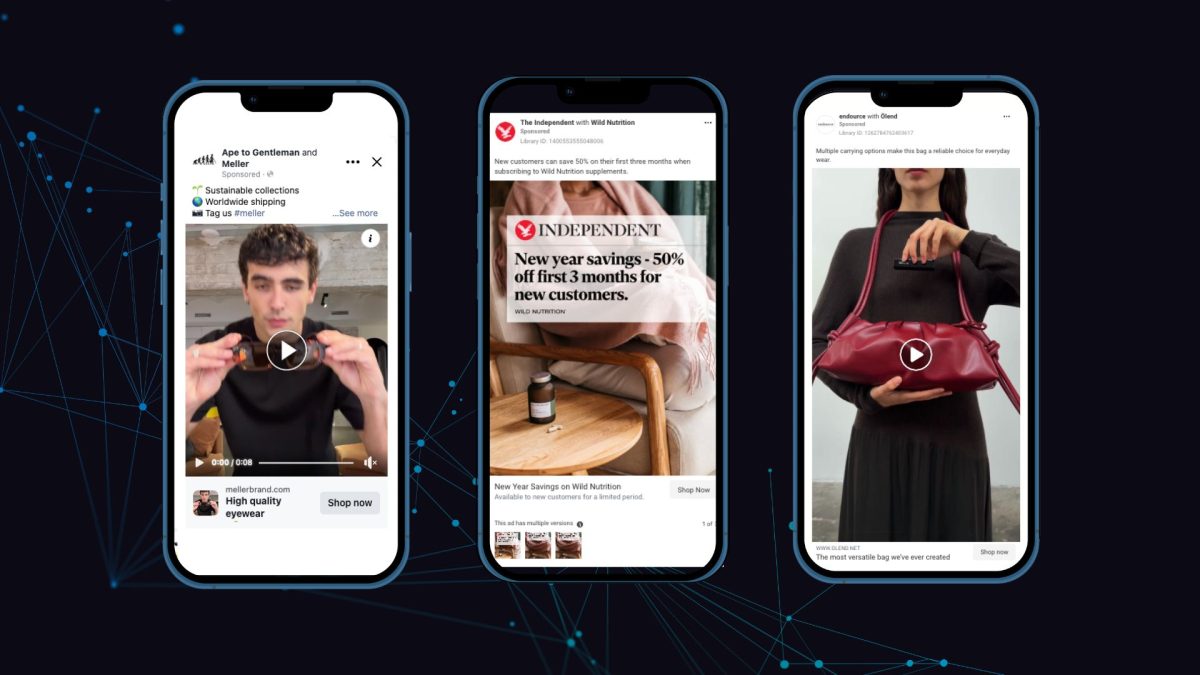
Meta Partner Ads formalise and streamline the whitelisting concept inside Meta’s infrastructure. Brands can run ads directly from a publisher or creator’s handle through authorised partnerships, while retaining campaign control in Ads Manager.
This model is increasingly important for three structural reasons.
First, creative volume now drives performance. Andromeda has intensified the need for diverse creative inputs. Meta’s optimisation engine benefits from multiple variations, hooks, and content styles. Partner Ads expand the pool of creative without requiring full in-house production.
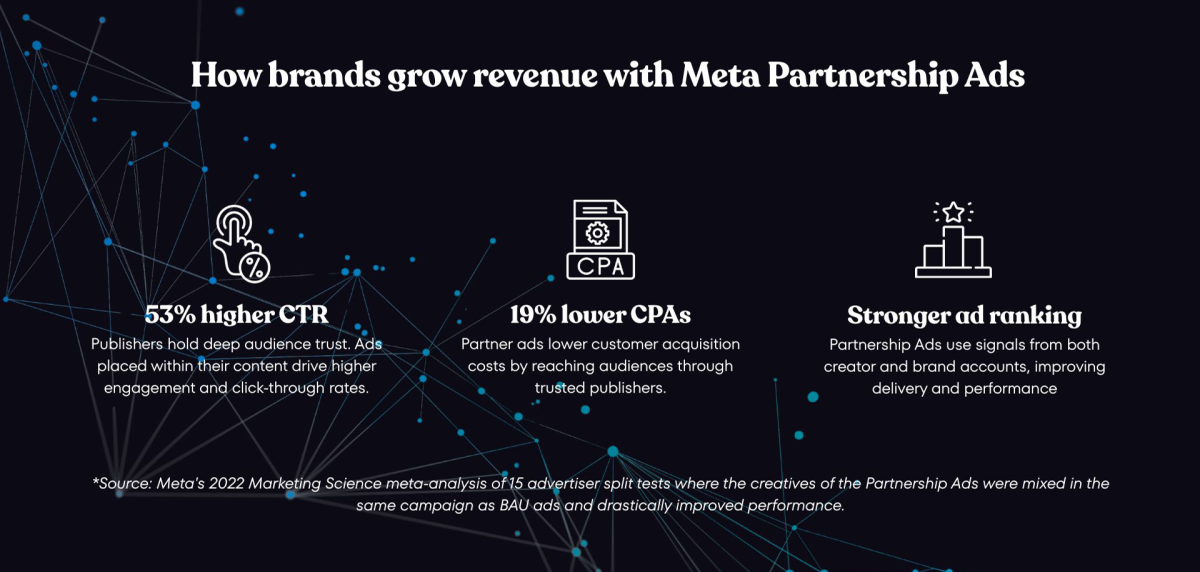
Second, engagement signals matter more than ever. Ads that originate from third-party accounts carry pre-existing social proof. Comments, reactions, and context contribute to stronger engagement velocity. Meta interprets those signals as quality indicators, which influences delivery and cost efficiency.
Third, trust has become a conversion variable. Consumers respond differently to content that appears as an endorsement rather than a brand announcement. Even when users know it is paid, the format changes how they judge it. That shift often translates into higher click-through rates and improved conversion efficiency.

Why Brands Are Seeing Better Results
When comparing Partner Ads to standard brand ads, the performance differences typically appear in three areas: click-through rate, cost per acquisition, and return on ad spend.
Partner Ads often deliver stronger CTR because the creative feels native to a specific audience rather than broadcast to everyone. They frequently show lower CPAs because engagement signals help the algorithm find higher-intent users more efficiently. Over time, this can translate into more stable ROAS as creative fatigue is reduced through diversification.
How WordSeed’s Meta Partnership Campaigns Work
The main barrier to running Partner Ads effectively is execution at scale. Brands struggle to source credible partners, structure fair commercial terms, and manage workflows across multiple publishers.
WordSeed’s Meta Partnership Campaigns fixes this.
Brands get access to premium publishers within the WordSeed platform. These publishersa are already ready and waiting for campaign offers with commercials already in place. Instead of negotiating fixed content fees, publishers earn a percentage of ad spend. This aligns incentives around performance rather than upfront production.
WordSeed pre-approves templates, so brands avoid back-and-forth revisions. Once authorised, brands run campaigns directly within Meta Ads Manager. Reporting remains inside the brand’s own ad account and the brand controls targeting, budgeting, and optimisation.
The absence of fixed fees materially changes the risk profile. Brands can test multiple partners without committing significant upfront capital. Underperforming creative can be paused quickly. Winning combinations can be scaled without renegotiation.
Why Scale Matters
Running one Partner Ad is easy. Building a repeatable Partner Ad system is not.
Without infrastructure, brands face outreach delays, inconsistent commercial terms, legal complexity and fragmented tracking. As a result, what should be a scalable growth lever becomes an operational burden.
To solve this, WordSeed centralises the process. It standardises commercial agreements, simplifies partner discovery and reduces operational overheads. Instead of managing disconnected relationships, brands operate within a structured framework.
Most importantly, this structure changes how Partner Ads function inside the business. Rather than running isolated tests, brands can embed Partner Ads directly into their paid media strategy. In turn, creative diversification becomes systematic rather than reactive.
In the current Meta environment, advantage comes from structure. Brands that build systems for creative expansion and signal amplification outperform those relying on isolated tactics.
Partner Ads are not a trend. They are a response to how Meta’s algorithm now prioritises engagement and trust.
For brands already investing heavily in paid social, the question is no longer whether to test Partner Ads. The question is whether they have the operational model to run them at scale.
And that is the gap WordSeed is built to fill.